

Tag Archives: Artificial Intelligence
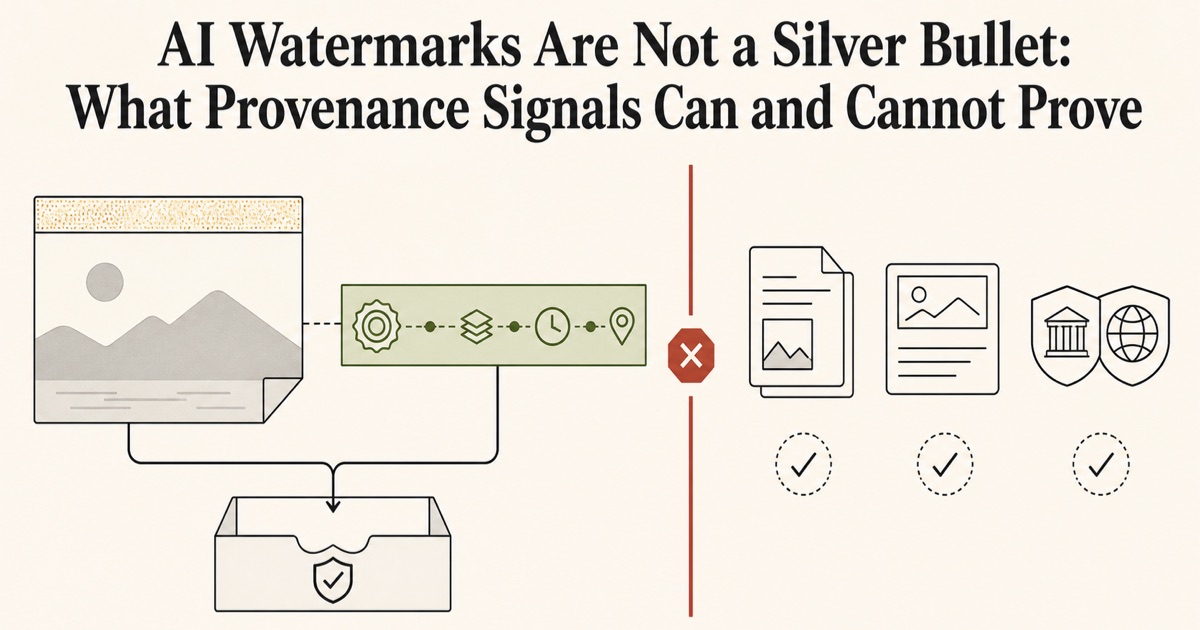
AI Watermarks Are Not a Silver Bullet: What Provenance Signals Can and Cannot Prove
C2PA metadata and embedded signals can offer helpful evidence about an image’s origin. They cannot, on their own, prove that an image is accurate, legally owned, or shown in the right context.
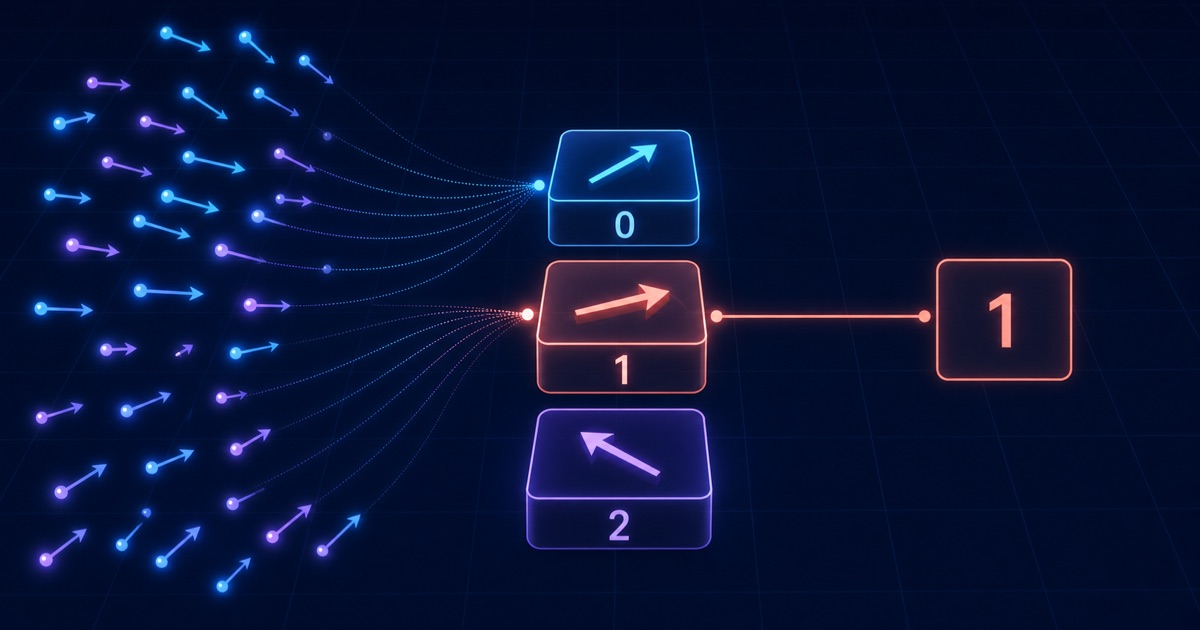
Vector Quantisation: How Code Books Compress Similar Data
Vector quantisation replaces each group of values with the index of a representative vector. Learn how code books, k-means, distortion, and trade-offs fit together.
Contextual Retrieval: Anthropic’s Approach to Reducing RAG Retrieval Failures
Anthropic’s Contextual Retrieval adds document-level meaning to RAG chunks before embedding and BM25 indexing. Here is how it works, what the 67% result means, and when to use it.
TurboVec: What This Rust Vector Index Is and How to Evaluate It
TurboVec is a Rust-based vector index with Python bindings built on TurboQuant. This article explains what the project claims to be, where vector compression fits, and what developers should verify before adopting it.
Meet LangGraph Swarm Agents: A Collaborative AI Ecosystem
Imagine building powerful multi-agent systems with LangGraph Swarm, where agents collaborate autonomously for seamless AI workflows. That’s LangGraph Swarm: a lightweight, decentralized multi-agent system where agents dynamically hand off tasks and the system retains memory of the last active agent for seamless conversation flow Unlike rigid supervisor architectures where a central agent dictates the flow,…
Building Autonomous AI Agents: A Practical Guide for Engineers
As AI moves beyond simple chatbots, building AI agents that can reason and act autonomously has become a key engineering challenge. This guide explores how to develop production-ready agents using practical, real-world techniques from OpenAI. AI agents represent a transformative leap in automation, transitioning from reactive chatbots to intelligent systems that can independently execute complex,…
Understanding the Agentic AI Stack: A Modern Blueprint for Building Intelligent Agents
The Agentic AI Stack is a modern framework designed to build intelligent agents in artificial intelligence applications. These agents are not just static tools, they observe, reason, act, and improve over time. To build such dynamic systems, we need a well-structured framework. That is where the Agentic AI Stack comes in. Layer 1: Tool /…
Building Intelligent Conversational Agents with LangGraph: A Tutorial Guide
Creating sophisticated conversational agents requires more than just a powerful language model. You need a framework that can manage complex conversational flows, maintain context, and handle decision-making with elegance. Enter LangGraph, a powerful toolkit built on top of LangChain that enables developers to create state-aware, multi-step reasoning systems with remarkable ease. Why LangGraph Matters? Traditional…
What Are Ensemble Methods in Machine Learning?
Ensemble methods combine predictions from multiple machine-learning models to produce a more reliable result. Learn how bagging, boosting, stacking, and random forests work.