Tag Archives: LLM
Build an AI Agent Evaluation Flywheel That Improves Prompts
A five-stage evaluation flywheel for turning AI agent traces into evidence-backed prompt improvements, without treating final answers as the whole story.
Why Final-Answer Evals Leave AI Agent Failures Invisible
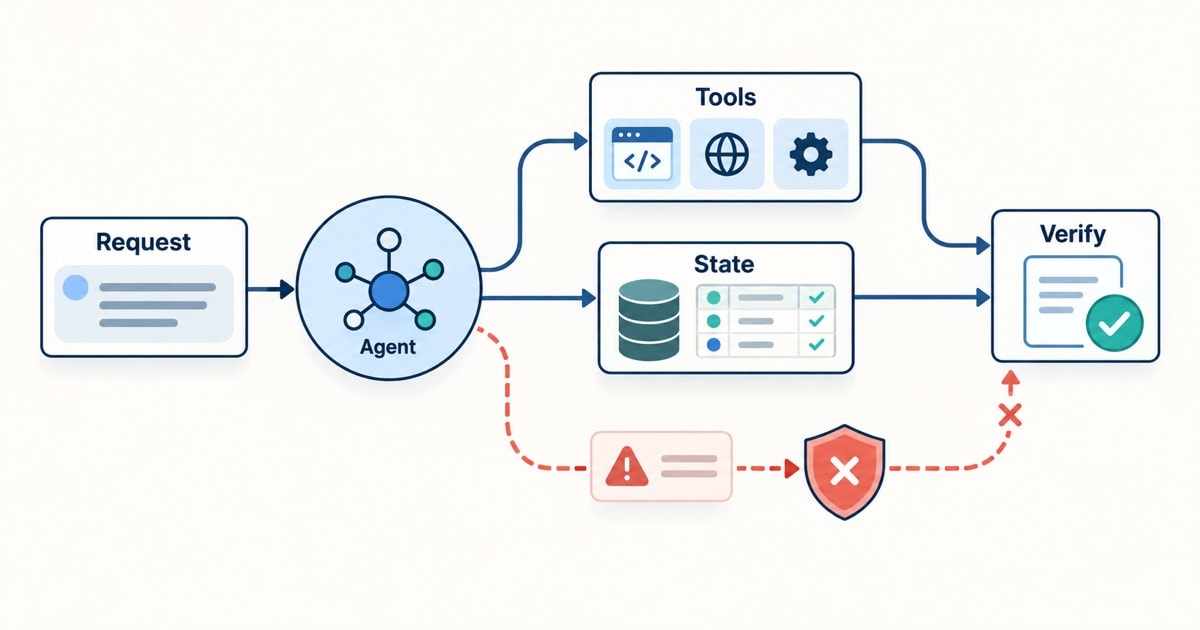
A correct final response can hide failed tool calls, broken constraints, and bad state changes. Learn why AI agent evaluation must score the full trajectory.
Contextual Retrieval: Anthropic’s Approach to Reducing RAG Retrieval Failures
Anthropic’s Contextual Retrieval adds document-level meaning to RAG chunks before embedding and BM25 indexing. Here is how it works, what the 67% result means, and when to use it.
Context Engineering for AI Agents: Memory, Retrieval, and Token Budgets
A practical framework for developers building AI agents that need the right context at the right time—without drowning the model in stale history, irrelevant documents, or runaway token costs.
Meet LangGraph Swarm Agents: A Collaborative AI Ecosystem
Imagine building powerful multi-agent systems with LangGraph Swarm, where agents collaborate autonomously for seamless AI workflows. That’s LangGraph Swarm: a lightweight, decentralized multi-agent system where agents dynamically hand off tasks and the system retains memory of the last active agent for seamless conversation flow Unlike rigid supervisor architectures where a central agent dictates the flow,…
Building Autonomous AI Agents: A Practical Guide for Engineers
As AI moves beyond simple chatbots, building AI agents that can reason and act autonomously has become a key engineering challenge. This guide explores how to develop production-ready agents using practical, real-world techniques from OpenAI. AI agents represent a transformative leap in automation, transitioning from reactive chatbots to intelligent systems that can independently execute complex,…
Understanding the Agentic AI Stack: A Modern Blueprint for Building Intelligent Agents
The Agentic AI Stack is a modern framework designed to build intelligent agents in artificial intelligence applications. These agents are not just static tools, they observe, reason, act, and improve over time. To build such dynamic systems, we need a well-structured framework. That is where the Agentic AI Stack comes in. Layer 1: Tool /…