
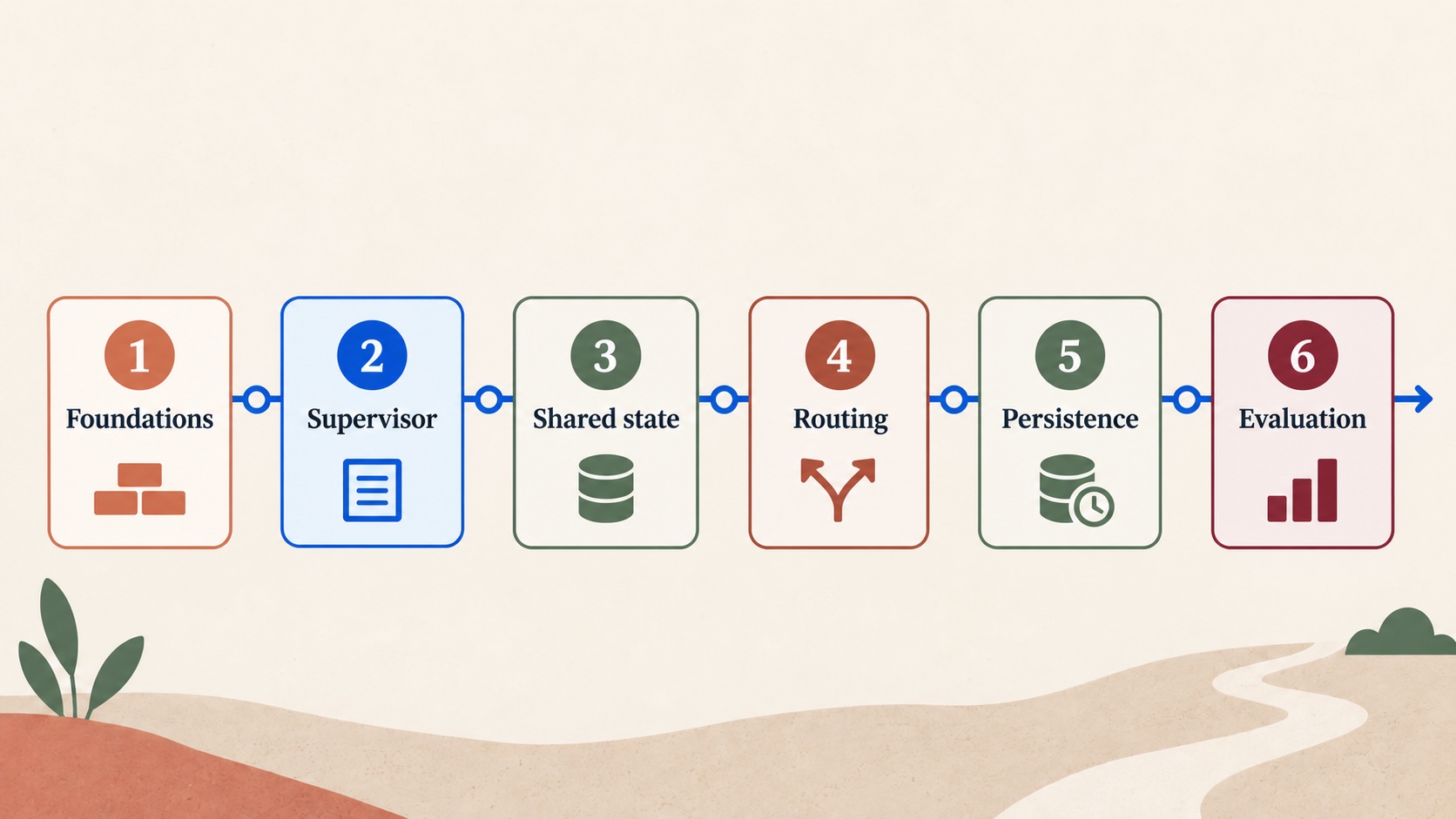
This LangGraph multi-agent systems tutorial series takes you from a single conversational agent to a reliable workflow of a supervisor and specialist agents. Each tutorial adds one practical capability: delegation, shared context, routing, recovery, or evaluation.
Who this series is for
This series is for Python developers who understand the basics of language models and want to move from one agent to a coordinated system of specialist agents. You should be comfortable reading Python, calling an LLM, and working with simple application state. You do not need to understand every LangGraph feature before starting.
Start with the foundations
Begin with Building Intelligent Conversational Agents with LangGraph. It introduces the stateful conversational-agent concepts that the multi-agent tutorials build on.
The tutorial path
- Foundations: Build an intelligent conversational agent with LangGraph.
- Supervisor architecture: Build a supervisor-based multi-agent system with LangGraph.
- Shared state and context: Control what each agent receives, retains, and returns.
- Routing and parallel execution: Send tasks to the right agents and combine their results.
- Persistence and recovery: Add checkpoints, retries, and resumable workflows.
- Evaluation: Measure routing quality, tool use, reliability, cost, and latency.
How to use this series
Read the tutorials in order if you are new to LangGraph. If you already understand graph state, nodes, and edges, use the path above to jump to the architecture you need. Every tutorial links back to this guide, explains its prerequisites, and points to the next step.
What you will learn about LangGraph multi-agent systems
Across the series, you will develop a practical workflow made from a supervisor and specialist agents. The examples separate planning, execution, context management, recovery, and evaluation so that each responsibility can be understood and tested independently.
The emphasis is on explicit state, understandable routing, useful traces, and controlled failure handling—not on adding agents simply because a workflow can support them. The result is a system that is easier to explain, debug, and improve than an opaque collection of prompts.